What a ketamine session feels like, before, during and after
Most people describe a dreamlike, detached state that peaks within 40 minutes and fades over an hour or two. Knowing what is normal ahead of time is one of the most useful things you can bring.
Most people describe a ketamine session as a dreamlike, detached state that begins within minutes, peaks for 20 to 40 minutes and fades over an hour or two, followed by grogginess that lasts the rest of the day. It can feel calm, strange, emotional or briefly unsettling, and sometimes all of those in one sitting. Knowing what is normal ahead of time is one of the most useful things you can bring into the room.
The short version
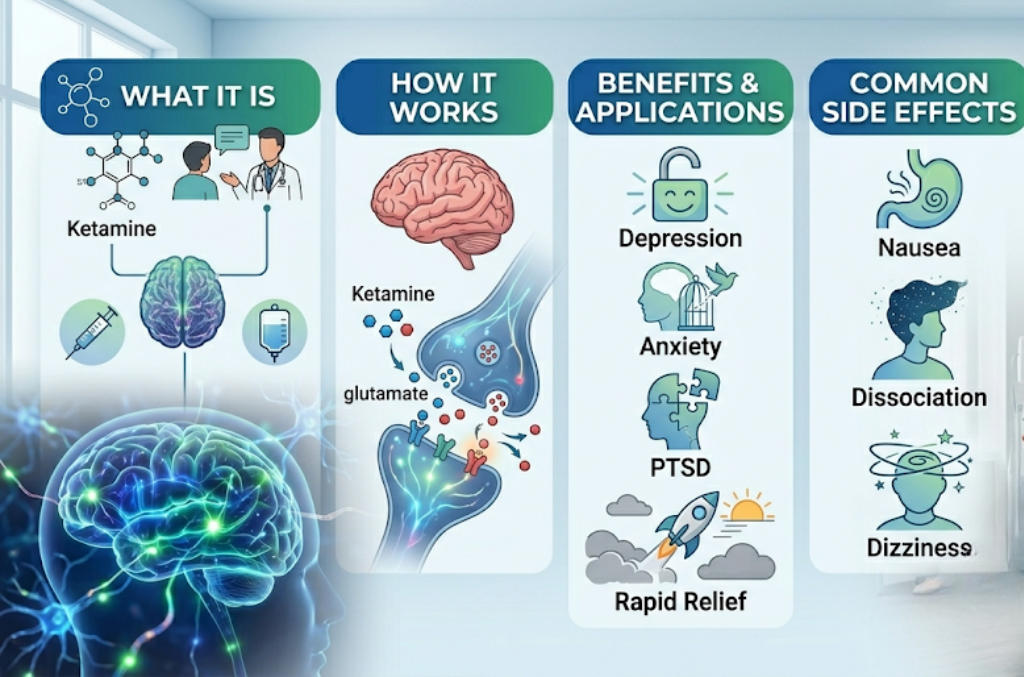
- The main effect is dissociation: feeling separate from your body, your surroundings or your usual sense of self. At treatment doses this is expected, not a sign of a problem.
- Common physical effects include dizziness, nausea, numbness, blurred vision and a temporary rise in blood pressure.
- The acute effects are mostly gone within about two hours. You should not drive until the next day after a session.
- Any change in mood, if it comes, may show up hours to days later rather than during the session itself.
- Experiences vary a lot between people and between sessions. A hard session does not mean treatment has failed.
This describes typical experiences with ketamine and esketamine (Spravato) given for depression under supervision. It is not a guide to self-dosing, and it is not a prediction of how you will feel.
Before the session
By the time you sit down for a first session, you should already have been through an evaluation that screened for psychosis, bipolar disorder, uncontrolled high blood pressure, heart disease, substance use and pregnancy. If that has not happened, stop there.
On the day, clinics usually ask you not to eat for a few hours beforehand, because nausea is common and an empty stomach makes vomiting less likely. Your blood pressure is checked before dosing. If it is too high, the session may be postponed. You will need someone to take you home, because driving is off the table until the next day after a night's sleep. The Spravato label says this explicitly, and it is sensible advice for any form of ketamine.
Many people feel anxious beforehand, especially the first time. That is normal. A good clinician will talk through what to expect, agree on a signal if you want help during the session, and ask what you would like to focus on, if anything.
During the session
The first few minutes
With IV ketamine, effects usually begin within a few minutes of the infusion starting. With Spravato, they build over the first several minutes after the spray. People often notice a heaviness or tingling in their limbs, a change in how sounds seem, and a sense that the room is slightly further away than it was.
The middle of the session
This is where dissociation is strongest. People describe:
- Feeling detached from their body, sometimes as if floating or sinking
- Time stretching or compressing, so 30 minutes can feel like 5 or like an hour
- Changes in vision, such as colors, patterns or blurring, especially with eyes closed
- A quieter, more distant relationship with their usual thoughts
- Memories or emotions surfacing, sometimes with unexpected intensity
Some people find this peaceful. Some find it interesting in a detached way. Some find it frightening, particularly the loss of a firm sense of where their body is. In the Spravato trials, dissociation, dizziness, nausea, sedation and vertigo were among the most common side effects, and most of these were reported to resolve on the same day.
Clinics usually keep the room quiet and dim. Many offer an eye mask and headphones with music. A trained person is either present or immediately available, and your blood pressure is checked at intervals because ketamine raises it for a while after dosing.
If a session gets hard
Difficult moments are common and usually pass as the drug wears off. It helps to have agreed ahead of time how you will let staff know you want support. Slow breathing, opening your eyes, and a hand to hold or a voice reminding you where you are can make a real difference. Tell your clinician afterward. They can adjust the dose, the setting or the approach next time.
After the session
The first two hours
As the dissociation fades, most people feel tired, a bit unsteady on their feet and slightly foggy. Nausea can linger. Spravato patients must stay under observation for at least two hours after each dose under the drug's REMS safety program, and most clinics giving IV ketamine keep patients for a similar period until they are steady and their blood pressure has settled.
Some people feel emotional or talkative. Others want to be left alone. Both are fine.
The rest of the day
Plan for a quiet evening. No driving, no operating machinery, no big decisions and no alcohol. Many people sleep well that night. Headache and mild nausea can come and go.
The days that follow
This is where people are watching for change, and it is worth being honest. In clinical trials, a meaningful share of people with treatment-resistant depression reported improvement in mood within hours to days of dosing. Others noticed little or nothing, especially after a single session. There is no reliable way to know in advance which group you will be in, which is why clinicians usually judge response over a series of sessions rather than one. Our post on how many ketamine sessions people need covers how that series is usually structured.
When improvement does come, people often describe it as a lifting of heaviness, more energy, or a sense that their usual negative thoughts have less grip. It may fade over days to weeks, which is part of why ketamine is used alongside therapy and ongoing care rather than on its own.
Does it feel different with IV, Spravato or at-home ketamine?
The core experience is similar. Differences come from the dose, how fast it reaches the brain, and the setting. IV dosing is controlled precisely and can be stopped. Spravato builds more gradually over several minutes. At-home lozenges absorb less predictably and are taken without trained staff present, which is one reason the FDA warned in 2023 about compounded ketamine used at home. Our at-home ketamine safety guide covers what monitoring should be in place.
What is not normal
Chest pain, a severe headache, trouble breathing, confusion that does not clear, or thoughts of harming yourself are reasons to tell staff immediately or call 911. Persistent hallucinations or paranoia after the session has ended also need prompt medical attention. Screening exists partly to reduce these risks, but no screening removes them entirely.
How to prepare
Arrange your ride home before the day. Wear comfortable clothes. Skip a heavy meal. Bring something soft to wear if rooms run cold. Tell the team about every medication and supplement you take, including anything you have taken that day. Decide in advance whether you want music or silence. And go in expecting the experience to be odd rather than pleasant or terrible. That expectation is usually the most accurate one.
If you are considering ketamine, the first step is an evaluation of whether it is appropriate at all. Ketamine is not a first-line treatment for depression, and our pillar guide on ketamine for treatment-resistant depression explains where it fits. Our ketamine therapy service page describes how Aone screens patients and what sessions involve.
Questions patients ask us
Is dissociation during a ketamine session a bad sign?
No. At the doses used for depression, dissociation is the expected effect, not a sign that something has gone wrong. It usually means feeling separate from your body or surroundings, time distortion and changes in vision or sound. It fades as the drug wears off. If it feels overwhelming, staff can help, and the dose can be adjusted next time.
Will I be awake during a ketamine session?
Yes. At antidepressant doses you remain conscious, though you may feel very relaxed, drowsy or far away from your surroundings. You can usually respond if someone speaks to you, even if talking feels effortful. This is different from the much higher doses of ketamine used for anesthesia, which cause unconsciousness.
Can I eat before a ketamine session?
Most clinics ask you to avoid food for a few hours beforehand, because nausea is a common side effect and an empty stomach lowers the chance of vomiting. Clear fluids may be allowed until closer to the session. Follow your clinic's specific instructions, and ask whether to take your usual medications that morning.
How soon can I drive after ketamine?
Not until the next day after a full night's sleep. The Spravato label says patients should not drive or operate machinery until the next day, and the same caution applies to other forms of ketamine. Plan for someone to take you home or arrange a ride before the day of your session.
Will I remember the session afterward?
Most people remember at least parts of it, though memories can be patchy or dreamlike, similar to recalling a vivid dream. Some people find it helpful to jot down impressions afterward or talk them through with a therapist, which is the idea behind integration sessions that some programs offer.
Does every ketamine session feel the same?
No. Experiences often vary from one session to the next, even at the same dose. Mood beforehand, sleep, the room and what is on your mind can all shape it. A difficult session does not mean treatment is failing, and a pleasant one does not mean it is working. Response is judged over a series.
Will I feel better right after the session?
Some people notice a lift in mood within hours to a day or two. Others notice little after one session, and some notice no change across a full series. During the session itself the main feeling is dissociation rather than improved mood. Clinicians usually judge benefit after several sessions using standard questionnaires.
Why does blood pressure get checked during ketamine treatment?
Ketamine and esketamine temporarily raise blood pressure and heart rate, usually peaking within the first hour. For most people the rise is modest and settles, but it can be significant in people with heart or blood vessel problems. That is why uncontrolled high blood pressure is a reason for exclusion and why readings are taken before, during and after dosing.
Can I bring my own music to a ketamine session?
Many clinics allow it and some encourage it. Calm instrumental music without lyrics is a common choice, because words can pull attention in unexpected directions. Ask the clinic ahead of time, and make sure headphones are comfortable. Some people prefer silence, which is fine too.
What side effects can last into the next day?
Tiredness, mild headache, light nausea and feeling a bit foggy are the most common. They usually clear within a day. Lasting confusion, hallucinations, paranoia, chest pain or severe headache are not expected and need prompt medical attention. Tell your clinician about anything unusual before your next session.
Talk to a licensed clinician
Reading about a treatment is not the same as knowing whether it fits your history. A consultation is a conversation about your own situation — not a sales call, and not a promise of any outcome.