
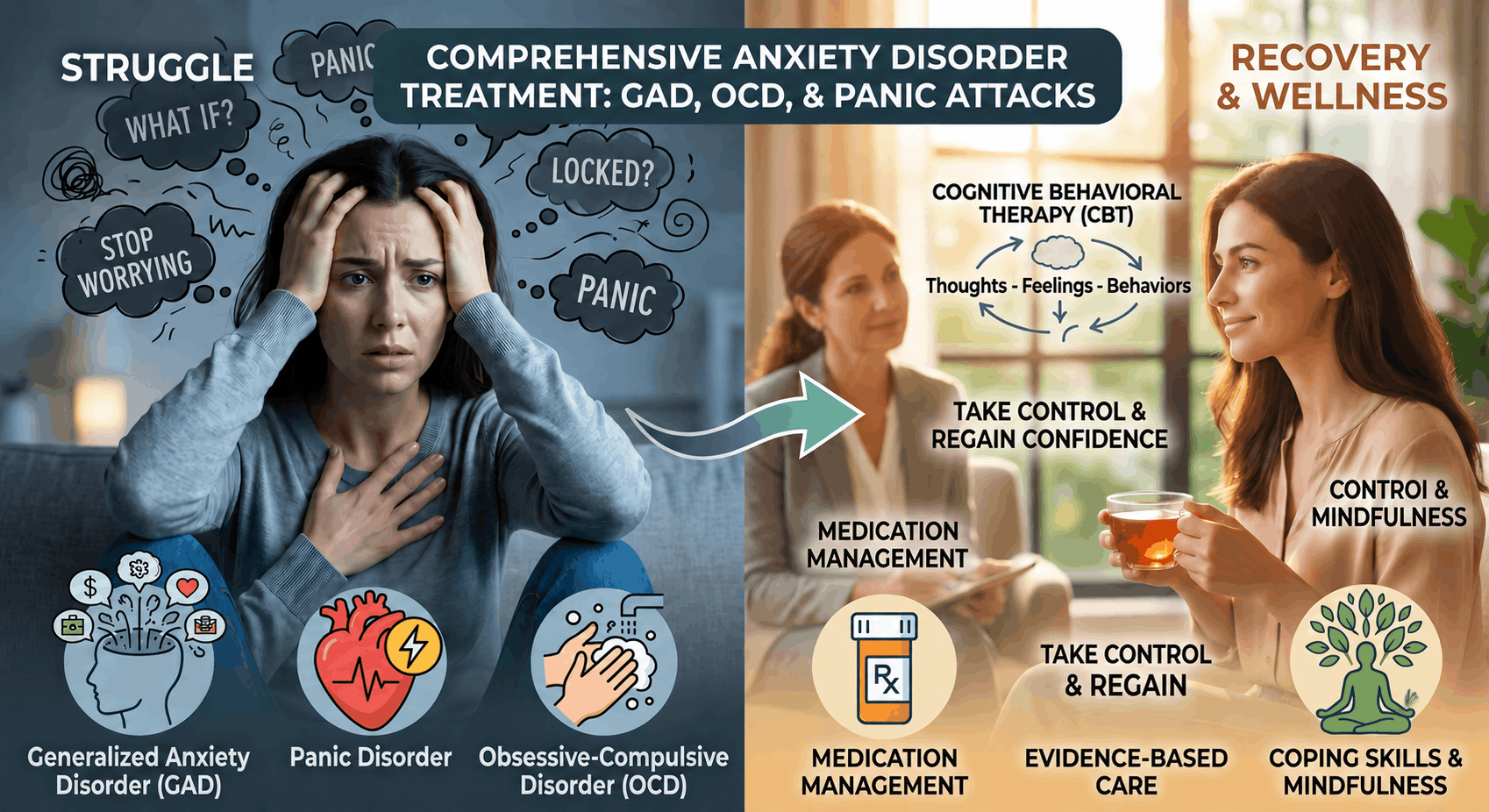
Anxiety can feel like your mind is stuck on “what if?” — what if something goes wrong, what if I lose control, what if I cannot stop these thoughts? For some people, these worries come and go. But for others, anxiety becomes so strong that it affects sleep, work, relationships, school, and daily life.
Anxiety disorders are mental health conditions that cause ongoing fear, worry, panic, or unwanted thoughts that feel hard to control. They are more than normal stress. Normal stress usually has a clear reason and improves when the situation gets better. Anxiety disorders can continue even when there is no immediate danger.
Common anxiety disorders include Generalized Anxiety Disorder (GAD), Panic Disorder, and Obsessive-Compulsive Disorder (OCD). GAD often causes constant worry about everyday things. Panic Disorder can cause sudden panic attacks with symptoms like a racing heart, shortness of breath, dizziness, or fear of losing control. OCD can lead to unwanted thoughts and repeated behaviors that a person feels driven to do.
The good news is that anxiety disorders are treatable. With the right support, many people learn how to understand their symptoms, calm their body, manage anxious thoughts, and feel more in control of their lives.
Symptoms of Anxiety Disorders
Anxiety does not always look like simple worry. It can also feel like a racing heart, tight chest, upset stomach, nonstop thoughts, or the need to avoid certain places.
- Anxiety symptoms can affect the mind, body, and behavior.
- Some people feel nervous or worried most of the day.
- Others may have sudden fear, panic, or a feeling that something bad is about to happen.
- These symptoms can feel confusing and scary, but they are real and treatable.
Emotional Symptoms of Anxiety
Anxiety can cause emotional symptoms such as:
- Constant worry or fear
- Feeling restless or on edge
- Trouble relaxing
- Racing thoughts
- Fear of losing control
- Feeling overwhelmed
- Difficulty focusing
- Irritability or mood changes
For different anxiety disorders, symptoms may appear in different ways:
- Generalized Anxiety Disorder (GAD): Worry may happen almost every day.
- OCD: Anxiety may come from unwanted thoughts or repeated urges.
- Panic Disorder: Fear may appear suddenly and feel very intense.
Physical Symptoms and Panic Attacks
Anxiety can also affect the body. Common physical symptoms include:
- Fast heartbeat
- Shortness of breath
- Chest tightness
- Sweating
- Shaking or trembling
- Dizziness
- Nausea or stomach discomfort
- Muscle tension
- Trouble sleeping
- Feeling tired often
During a panic attack, symptoms may feel very strong. A person may feel like:
- They are having a heart attack
- They cannot breathe
- They are losing control
- Something terrible is about to happen
Panic attacks can feel frightening, but they are treatable with the right support.
Behavioral Changes Caused by Anxiety
Anxiety can also change how a person acts in daily life. For example, someone may start avoiding things that make them feel anxious.
Common behavior changes include:
- Avoiding social situations
- Missing work, school, or appointments
- Repeating certain actions to feel safe
- Asking for reassurance often
- Avoiding driving, crowds, or public places
- Struggling with daily responsibilities
Avoiding fear may help for a short time, but it can make anxiety stronger over time. Professional anxiety treatment can help people face fears safely and build better coping skills.
When Anxiety Becomes a Medical Concern
Anxiety may become a concern when:
- It affects your sleep
- It affects your work or school
- It causes problems in relationships
- It makes daily tasks hard
- It causes frequent panic attacks
- It feels difficult to control
- It keeps coming back even when there is no clear danger
Some anxiety symptoms can look like other medical issues, such as heart problems or thyroid conditions. That is why a professional evaluation is important.
Generalized Anxiety Disorder (GAD)
Generalized Anxiety Disorder can feel like your brain is carrying a heavy list of worries all day — even when nothing dangerous is happening. You may know that you are worrying too much, but it can still feel hard to stop.
- Generalized Anxiety Disorder, also called GAD, is a type of anxiety disorder.
- It causes ongoing worry that feels difficult to control.
- The worry may be about everyday things like:
- Health
- Money
- Work
- Family
- School
- Relationships
- Future plans
- GAD is more than normal stress.
- Normal stress often improves when the problem is solved.
- GAD can continue for weeks or months and may affect daily life, sleep, focus, and mood.
- The good news is that Generalized Anxiety Disorder treatment can help reduce symptoms and improve quality of life.
Signs and Symptoms of GAD
People with GAD may experience:
- Excessive worry on most days
- Trouble controlling anxious thoughts
- Feeling nervous, restless, or on edge
- Difficulty relaxing
- Trouble focusing or concentrating
- Irritability or mood changes
- Muscle tension
- Headaches or stomach discomfort
- Feeling tired often
- Trouble falling asleep or staying asleep
- Feeling overwhelmed by small tasks
- Worrying even when there is little or no clear reason
These symptoms can make simple daily activities feel stressful or exhausting.
Causes and Risk Factors
GAD does not always have one clear cause. It may develop because of a mix of factors, such as:
- Family history of anxiety
- Brain chemistry and biology
- Long-term stress
- Trauma or difficult life events
- Major life changes
- High-pressure work, school, or family situations
- Other mental health conditions, such as depression or panic disorder
Some people may feel they have “always been a worrier,” while others may notice anxiety after a stressful event or major life change.
How GAD Is Diagnosed
A professional diagnosis is important because anxiety symptoms can sometimes look like other health problems.
To understand your symptoms, a provider may:
- Ask about your worries and how long they have been happening
- Ask how anxiety affects your work, school, sleep, and relationships
- Review your medical history
- Ask about stress, trauma, family history, or substance use
- Use a mental health screening or questionnaire
- Recommend a physical exam or lab tests if another medical condition may be involved
A provider may diagnose GAD when worry is hard to control, happens on most days for at least 6 months, and comes with symptoms such as restlessness, fatigue, trouble focusing, irritability, muscle tension, or sleep problems.
GAD Treatment at A One Health & Wellness
At A One Health & Wellness, treatment for Generalized Anxiety Disorder is personalized to each patient.
Your care plan may include:
- Anxiety therapy
- Cognitive Behavioral Therapy, also called CBT
- Medication management when appropriate
- Stress management techniques
- Coping skills for daily worry
- Support for sleep, focus, and emotional balance
- A plan to help you feel more in control of your thoughts and daily life
Panic Disorder and Panic Attacks
A panic attack can feel like your body’s alarm system is going off for no clear reason. Your heart may race, your chest may feel tight, your breathing may change, and your mind may tell you that something terrible is happening — even when there is no real danger.
- Panic attacks are sudden episodes of intense fear or discomfort.
- They can cause strong physical and emotional symptoms.
- A panic attack can feel scary because the symptoms may come on quickly.
- Panic Disorder happens when a person has repeated, unexpected panic attacks and starts worrying about having more attacks.
- Not everyone who has a panic attack has Panic Disorder.
- The good news is that panic attacks and Panic Disorder can be treated with professional support, therapy, and, when appropriate, medication.
What Is a Panic Attack?
A panic attack is a sudden rush of fear that can feel overwhelming.
During a panic attack, a person may feel:
- Out of control
- Unsafe, even when they are not in danger
- Like they cannot breathe properly
- Like they are having a heart attack
- Like something bad is about to happen
- Afraid that the symptoms will not stop
Panic attacks can happen with or without a clear trigger. Because symptoms like chest tightness, shortness of breath, and a racing heart can look like other medical conditions, a professional evaluation is important.
Symptoms of Panic Disorder
Common symptoms during a panic attack may include:
- Fast or pounding heartbeat
- Chest pain or chest tightness
- Shortness of breath
- Sweating
- Shaking or trembling
- Dizziness or lightheadedness
- Nausea or stomach discomfort
- Chills or hot flashes
- Numbness or tingling
- Feeling detached from reality
- Fear of losing control
- Fear of dying
For some people, the fear of another panic attack becomes a major problem. They may start avoiding places, activities, or situations because they worry an attack may happen again.
Panic Attacks vs. Panic Disorder
A panic attack is one episode of sudden fear or intense physical symptoms.
Panic Disorder is different because it usually includes:
- Repeated panic attacks
- Panic attacks that happen unexpectedly
- Ongoing worry about having another attack
- Fear of what the attack could mean
- Avoiding places or situations because of panic symptoms
- Changes in daily behavior because of fear
For example, a person may stop driving, avoid crowds, skip work, or stay away from public places because they fear having another panic attack.
Common Panic Attack Triggers
Panic attacks can happen suddenly, but some people may notice certain triggers.
Possible triggers may include:
- High stress
- Lack of sleep
- Crowded places
- Driving
- Public speaking
- Health worries
- Conflict or emotional stress
- Certain memories or past trauma
- Caffeine or substance use
- Fear of having another panic attack
Sometimes, the fear of a panic attack can become a trigger by itself. This can create a cycle where a person avoids more and more situations to feel safe.
Obsessive-Compulsive Disorder (OCD)
Everyone has occasional unwanted thoughts. But for people with OCD, these thoughts can become overwhelming and difficult to ignore. The anxiety caused by these thoughts often leads to repeated behaviors or mental rituals that feel necessary to reduce fear or discomfort.
- Obsessive-Compulsive Disorder (OCD) is a mental health condition related to anxiety.
- OCD involves two main parts:
- Obsessions: Unwanted thoughts, images, or urges that cause anxiety.
- Compulsions: Repeated actions or mental rituals performed to reduce that anxiety.
- These thoughts and behaviors can become time-consuming and interfere with daily life.
- OCD is not simply about being organized, clean, or detail-oriented.
- It is a medical condition that can affect relationships, work, school, and emotional well-being.
- With the right treatment, many people learn how to manage OCD symptoms and regain control of their lives.
H3: What Is OCD?
People with OCD often experience recurring thoughts that create significant stress or fear.
These thoughts may:
- Feel intrusive or unwanted
- Be difficult to control
- Return repeatedly throughout the day
- Cause anxiety, guilt, or discomfort
- Lead to repetitive behaviors intended to reduce distress
Many individuals with OCD understand that their fears may not be realistic, but the anxiety can still feel very real and difficult to ignore.
H3: Common Obsessions and Compulsions
Common obsessions may include:
- Fear of germs or contamination
- Fear of harming yourself or others
- Fear of making mistakes
- Need for certainty or perfection
- Unwanted aggressive, sexual, or disturbing thoughts
- Fear of losing control
- Excessive concern about safety
Common compulsions may include:
- Repeated hand washing or cleaning
- Checking locks, doors, or appliances multiple times
- Repeating words, prayers, or mental rituals
- Counting objects or actions
- Arranging items in a specific order
- Seeking constant reassurance from others
- Repeating tasks until they feel "just right"
These behaviors may provide temporary relief, but they often strengthen the cycle of OCD over time.
H3: How OCD Impacts Mental Health
Without treatment, OCD can affect many areas of life.
Some common challenges include:
- Increased anxiety and stress
- Difficulty focusing at work or school
- Trouble maintaining relationships
- Low self-confidence
- Feelings of frustration, shame, or guilt
- Sleep problems
- Avoiding certain situations or places
- Spending hours each day managing obsessions and compulsions
Over time, OCD can make daily responsibilities feel exhausting and overwhelming.
H3: What Causes OCD?
There is no single cause of OCD. Research suggests that several factors may play a role, including:
- Genetics and family history
- Brain chemistry and function
- Stressful life events
- Trauma or major life changes
- Other mental health conditions such as anxiety or depression
Each person's experience with OCD is different, which is why personalized treatment is important.
What Causes Anxiety Disorders?
Many people ask, “Why do I have anxiety?” The truth is that anxiety disorders usually do not have one single cause. Instead, they often develop from a combination of biological, psychological, and environmental factors.
- Anxiety disorders can affect people of all ages and backgrounds.
- Some people develop anxiety gradually over time.
- Others may notice symptoms after a stressful event or major life change.
- Understanding the causes of anxiety can help you take the first step toward effective treatment and recovery.
H3: Biological and Genetic Factors
Research shows that biology can play a role in anxiety disorders.
Some biological factors include:
- Family history of anxiety disorders
- Brain chemistry imbalances
- Differences in how the brain processes fear and stress
- Hormonal changes
- Certain medical conditions
If a close family member has anxiety, panic disorder, or OCD, you may have a higher risk of developing similar symptoms. However, having a family history does not mean you will definitely develop an anxiety disorder.
H3: Stress, Trauma, and Life Events
Stressful experiences can sometimes trigger or worsen anxiety symptoms.
Common examples include:
- Relationship difficulties
- Divorce or separation
- Financial stress
- Job loss or workplace pressure
- Academic stress
- Serious illness or injury
- Loss of a loved one
- Major life transitions
- Childhood trauma or adverse experiences
While stress is a normal part of life, ongoing or overwhelming stress can make anxiety symptoms more difficult to manage.
H3: Environmental and Lifestyle Influences
Daily habits and environmental factors can also affect anxiety levels.
Some common influences include:
- Poor sleep habits
- High caffeine intake
- Lack of physical activity
- Chronic stress
- Substance or alcohol use
- Social isolation
- Unhealthy coping mechanisms
- Excessive exposure to negative news or social media
Making healthy lifestyle changes may help reduce anxiety symptoms, especially when combined with professional treatment.
H3: Negative Thought Patterns and Core Beliefs
The way we think can have a powerful impact on anxiety.
People with anxiety disorders may experience:
- Constant "what if" thinking
- Fear of the worst-case scenario
- Self-doubt and self-criticism
- Perfectionism
- Fear of failure or rejection
- Difficulty tolerating uncertainty
Over time, these thought patterns can create a cycle where anxiety continues to grow.
How Anxiety Disorders Are Diagnosed
Many people live with anxiety symptoms for months or even years before seeking help. They may think their symptoms are “just stress” or something they need to handle on their own. However, getting an accurate diagnosis is an important first step toward finding effective treatment and feeling better.
- Anxiety disorders can sometimes look like other medical conditions.
- Symptoms such as chest pain, dizziness, rapid heartbeat, or fatigue may have multiple causes.
- A professional evaluation helps identify whether anxiety is the main concern or if another health condition may be contributing to symptoms.
- Early diagnosis can help prevent symptoms from becoming more severe over time.
Comprehensive Mental Health Assessment
A mental health assessment helps your provider understand how anxiety is affecting your daily life.
During an assessment, your provider may ask about:
- Your current symptoms
- How long symptoms have been present
- How anxiety affects work, school, or relationships
- Situations that trigger anxiety
- Sleep patterns
- Stress levels
- Family history of anxiety or mental health conditions
- Past treatment experiences
The goal is to create a clear picture of your symptoms and determine the most appropriate treatment plan.
Physical Exams and Medical Testing
Because anxiety symptoms can sometimes resemble physical health conditions, your provider may recommend medical testing.
This may include:
- A physical examination
- Blood tests
- Thyroid function testing
- Heart health evaluations
- Electrocardiogram (ECG or EKG), when appropriate
- Review of current medications and medical history
These evaluations help rule out medical conditions that may cause symptoms similar to anxiety.
Psychological Evaluation and Screening
A psychological evaluation helps identify the type and severity of anxiety symptoms.
This process may include:
- Mental health questionnaires
- Anxiety screening tools
- Discussions about thoughts, emotions, and behaviors
- Questions about panic attacks or intrusive thoughts
- Assessment of coping habits
- Review of alcohol or substance use
These tools help providers determine whether symptoms are related to:
- Generalized Anxiety Disorder (GAD)
- Panic Disorder
- Obsessive-Compulsive Disorder (OCD)
- Social Anxiety Disorder
- Other mental health conditions
Identifying Co-Occurring Conditions
Many people with anxiety may also experience other mental health concerns.
These may include:
- Depression
- Panic Disorder
- OCD
- Trauma-related conditions
- Sleep disorders
- Stress-related disorders
Identifying all contributing factors allows providers to develop a more personalized and effective treatment plan.
What Happens After an Anxiety Diagnosis?
Once a diagnosis is made, our provider will discuss treatment options based on your unique needs and goals.
Your personalized treatment plan may include:
- Cognitive Behavioral Therapy (CBT)
- Anxiety counseling
- Medication management
- Stress reduction techniques
- Lifestyle recommendations
- Coping skills training
- Ongoing support and monitoring
Evidence-Based Treatment for Anxiety Disorders
Living with anxiety can feel exhausting, but effective treatment can make a real difference. Many people experience significant improvement when they receive the right combination of therapy, coping strategies, and medical support.
- Anxiety disorders are highly treatable.
- Treatment is tailored to each person's symptoms, goals, and lifestyle.
- The most effective approaches focus on addressing both the symptoms and the underlying causes of anxiety.
- Early treatment can help prevent symptoms from becoming more severe and disruptive over time.
Personalized Treatment Plans
No two people experience anxiety in exactly the same way.
That's why treatment often begins with a personalized care plan based on:
- Your specific diagnosis
- Symptom severity
- Personal goals
- Medical history
- Current stressors
- Lifestyle factors
- Previous treatment experiences
A personalized approach helps ensure that treatment addresses your unique needs rather than using a one-size-fits-all solution.
Cognitive Behavioral Therapy (CBT)
Cognitive Behavioral Therapy (CBT) is one of the most effective treatments for anxiety disorders.
CBT helps individuals:
- Identify negative thought patterns
- Recognize cognitive distortions
- Understand the connection between thoughts, feelings, and behaviors
- Challenge unhelpful beliefs
- Develop healthier coping strategies
- Reduce anxiety-related avoidance
Many people begin noticing improvements within a few weeks of consistent treatment.
Exposure Therapy for Anxiety and OCD
Exposure-based techniques may be used to help individuals gradually face situations, thoughts, or experiences that trigger anxiety.
Benefits of exposure therapy may include:
- Reduced fear responses
- Increased confidence
- Improved emotional resilience
- Less avoidance behavior
- Better management of anxiety symptoms
For individuals with OCD, specialized approaches such as Exposure and Response Prevention (ERP) can be highly effective.
Medication Management
For some individuals, medication may be recommended as part of a comprehensive treatment plan.
Medication may help:
- Reduce excessive worry
- Improve mood
- Decrease panic symptoms
- Support daily functioning
- Improve sleep quality
Common medications used for anxiety disorders may include:
- Selective Serotonin Reuptake Inhibitors (SSRIs)
- Serotonin-Norepinephrine Reuptake Inhibitors (SNRIs)
- Other medications based on individual needs
Medication decisions should always be made in consultation with a qualified healthcare provider.
Lifestyle and Stress Management Strategies
Healthy lifestyle habits can play an important role in anxiety management.
Helpful strategies may include:
- Regular physical activity
- Consistent sleep routines
- Stress reduction techniques
- Mindfulness practices
- Relaxation exercises
- Healthy nutrition
- Limiting caffeine and alcohol
- Building supportive relationships
While lifestyle changes alone may not eliminate anxiety, they can significantly support long-term recovery.
What Results Can You Expect from Anxiety Treatment?
Every person's journey is different, but many people experience:
- Fewer anxiety symptoms
- Reduced panic attacks
- Better emotional regulation
- Improved confidence
- Healthier relationships
- Better focus and productivity
- Increased overall quality of life
Treatment is not about becoming a different person. It is about gaining the tools and support needed to manage anxiety more effectively and live with greater confidence
Medications Used to Treat Anxiety Disorders
Therapy is often the foundation of anxiety treatment, but for some people, medication can provide additional support. When used appropriately, medication may help reduce symptoms, improve daily functioning, and make it easier to benefit from therapy and other coping strategies.
- Medication is not necessary for everyone with anxiety.
- Some people benefit from therapy alone.
- Others may achieve better results with a combination of therapy and medication.
- The right treatment plan depends on your symptoms, medical history, and personal goals.
- Medication decisions should always be made with a qualified healthcare provider.
SSRIs for Anxiety and Panic Disorder
Selective Serotonin Reuptake Inhibitors (SSRIs) are commonly prescribed for anxiety disorders.
SSRIs may help:
- Reduce excessive worry
- Improve mood
- Decrease panic symptoms
- Lower anxiety levels over time
- Improve overall emotional well-being
Common examples include:
- Sertraline (Zoloft)
- Fluoxetine (Prozac)
- Paroxetine (Paxil)
Benefits of SSRIs:
- Well-studied for anxiety treatment
- Generally safe for long-term use
- Effective for GAD, Panic Disorder, and OCD
- Lower risk of dependence compared to some other medications
It may take several weeks before noticeable improvements occur.
SNRIs and Other Treatment Options
Serotonin-Norepinephrine Reuptake Inhibitors (SNRIs) are another class of medications used to treat anxiety.
SNRIs may help:
- Reduce anxiety symptoms
- Improve focus and concentration
- Support emotional balance
- Reduce physical symptoms related to anxiety
A commonly prescribed SNRI is:
- Venlafaxine (Effexor XR)
Your provider may recommend different medications depending on your symptoms and treatment history.
Benzodiazepines: Benefits and Risks
Benzodiazepines are medications that may provide short-term relief from severe anxiety or panic symptoms.
Examples include:
- Alprazolam (Xanax)
- Clonazepam (Klonopin)
Potential benefits:
- Fast symptom relief
- Reduced panic symptoms
- Temporary support during severe anxiety episodes
Important considerations:
- Usually prescribed for short-term use
- May cause drowsiness
- Can lead to dependence if used improperly
- May interact with other medications
- Not appropriate for everyone
Because of these risks, healthcare providers carefully evaluate whether benzodiazepines are the right choice for a patient.
Finding the Right Medication Plan
Finding the right medication sometimes takes time.
Your provider may:
- Review your symptoms and medical history
- Discuss potential benefits and risks
- Monitor your progress regularly
- Adjust dosages when needed
- Recommend switching medications if necessary
- Combine medication with therapy for better results
It is important to:
- Take medication exactly as prescribed
- Attend follow-up appointments
- Report side effects to your provider
- Avoid stopping medication without medical guidance
Is Medication the Right Choice for You?
Medication may be beneficial if:
- Anxiety is interfering with daily life
- Panic attacks are frequent
- Symptoms remain severe despite therapy
- Anxiety affects sleep, work, or relationships
- Additional support is needed alongside counseling
How CBT Helps Reduce Anxiety Symptoms
Many people with anxiety feel trapped in a cycle of worry, fear, and avoidance. The good news is that these patterns can be changed. Cognitive Behavioral Therapy (CBT) is one of the most effective and widely used treatments for anxiety disorders because it helps people understand how their thoughts, feelings, and behaviors are connected.
- CBT stands for Cognitive Behavioral Therapy.
- It is a structured, evidence-based form of therapy.
- CBT helps people identify and change unhelpful thinking patterns.
- It teaches practical skills that can be used in everyday life.
- CBT is commonly used to treat:
- Generalized Anxiety Disorder (GAD)
- Panic Disorder
- Obsessive-Compulsive Disorder (OCD)
- Social Anxiety
- Stress-related conditions
Understanding Thought Patterns
People with anxiety often experience automatic thoughts that increase fear and worry.
Examples include:
- "Something bad is going to happen."
- "I won't be able to handle this."
- "What if everything goes wrong?"
- "I need to be perfect."
- "I am not good enough."
These thoughts can feel true in the moment, but they are often based on fear rather than facts.
CBT helps individuals:
- Recognize anxious thinking patterns
- Understand how thoughts influence emotions
- Separate facts from assumptions
- Develop more balanced ways of thinking
Identifying Cognitive Distortions
Cognitive distortions are thinking habits that can make anxiety worse.
Common examples include:
- Catastrophizing (expecting the worst-case scenario)
- Overgeneralizing from one negative experience
- Black-and-white thinking
- Excessive self-criticism
- Mind reading or assuming what others think
- Focusing only on negative outcomes
By learning to identify these patterns, individuals can begin to challenge them and reduce their impact.
Changing Anxiety-Driven Behaviors
Anxiety often affects behavior as much as thoughts.
Common anxiety-driven behaviors include:
- Avoiding situations that feel uncomfortable
- Seeking reassurance repeatedly
- Procrastinating due to fear of failure
- Withdrawing from social situations
- Repeating behaviors to feel safe
CBT helps people:
- Understand why these behaviors happen
- Reduce avoidance patterns
- Face fears in a gradual and manageable way
- Build confidence through practice
- Develop healthier coping responses
Over time, these changes can reduce anxiety and improve daily functioning.
Building Long-Term Coping Skills
One of the biggest benefits of CBT is that it teaches skills that can be used long after therapy ends.
These skills may include:
- Stress management techniques
- Problem-solving strategies
- Relaxation exercises
- Mindfulness practices
- Emotional regulation skills
- Healthy communication techniques
- Resilience-building tools
Many people find that CBT not only helps reduce anxiety symptoms but also improves their ability to handle future challenges.
Why CBT Is Effective for Anxiety Disorders
CBT has helped millions of people manage anxiety more effectively because it focuses on practical, measurable change.
Benefits of CBT may include:
- Reduced worry and fear
- Fewer panic attacks
- Improved self-confidence
- Better emotional control
- Stronger coping skills
- Healthier relationships
- Improved quality of life
Benefits of Professional Anxiety Treatment
Many people try to manage anxiety on their own for months or even years. While self-help strategies can be useful, professional treatment can provide the tools, guidance, and support needed to create lasting change.
- Anxiety treatment is not just about reducing symptoms.
- It is about improving your overall quality of life.
- Professional support helps you understand the root causes of anxiety and develop healthier ways to respond to stress.
- With the right treatment plan, many people experience meaningful improvements in both their mental and physical well-being.
Improved Emotional Well-Being
Professional anxiety treatment can help you feel more balanced and in control of your emotions.
Benefits may include:
- Reduced worry and fear
- Better emotional stability
- Greater peace of mind
- Improved self-confidence
- Increased sense of control
- Less frustration and overwhelm
- Better ability to handle life's challenges
As anxiety decreases, many people find it easier to enjoy everyday activities and focus on what matters most.
Better Relationships and Social Confidence
Anxiety can affect communication, trust, and social interactions.
Treatment can help you:
- Feel more comfortable in social situations
- Improve communication skills
- Reduce fear of judgment or rejection
- Strengthen personal relationships
- Build healthier boundaries
- Increase confidence in work, school, and family settings
When anxiety is managed effectively, relationships often become more fulfilling and less stressful.
Increased Productivity and Quality of Life
Anxiety can make it difficult to focus, make decisions, and stay productive.
Professional treatment may help you:
- Improve concentration and focus
- Complete daily tasks more effectively
- Make decisions with greater confidence
- Reduce procrastination caused by fear or worry
- Improve work and academic performance
- Feel more engaged in daily life
Many individuals discover that they have more energy and motivation once anxiety symptoms are under better control.
Better Physical Health
Anxiety affects more than just your thoughts and emotions. It can also impact physical health.
Managing anxiety may help reduce:
- Sleep problems
- Muscle tension
- Fatigue
- Headaches
- Digestive discomfort
- Stress-related physical symptoms
Improved mental health often contributes to better overall wellness and healthier lifestyle habits.
Long-Term Coping Skills for Life
One of the greatest benefits of anxiety treatment is learning skills that can support you for years to come.
These skills may include:
- Stress management techniques
- Healthy coping strategies
- Emotional regulation tools
- Problem-solving skills
- Mindfulness practices
- Resilience-building habits
- Positive communication skills
Rather than simply treating symptoms, professional care helps you build a strong foundation for long-term mental wellness.
You Don't Have to Face Anxiety Alone
Seeking help is not a sign of weakness. It is a sign that you are taking an important step toward improving your health and well-being.
Professional anxiety treatment can help you:
- Understand your symptoms
- Develop effective coping strategies
- Regain confidence
- Improve daily functioning